
May is ME Awareness Month. Also known as Chronic Fatigue Syndrome, it is believed that between 17–30 million¹ people worldwide live with this condition. I am one of them.
What Is ME?
ME is a long term, neurological disorder that is known as a fluctuating illness.
- A neurological disorder affects the brain and nerves throughout the body, including the spine.
- A fluctuating illness, whether mental or physical, is where the main feature is significant variations in severity, the frequency of flare-ups, and types of symptoms.
The full name for ME is Myalgic Encephalomyelitis.
- Myalgic refers to the muscle pain which can affect various parts, or throughout, the body.
- Encephalomyelitis refers to inflammation of the brain and spinal cord, which is generally accepted by medical professionals to be the main cause of ME.
What Are the Symptoms?
The symptoms of ME vary greatly in types, and which ones are experienced by those with the condition.
The main symptoms are:
- Post-exertional malaise (see below)
- Cognitive disfunction (also known as brain fog)
- Unrefreshing sleep and lack of sleep.
- General fatigue and muscle fatigue (see below)
Others can be:
- Muscle and joint pain, and pain on touch
- Gastrointestinal symptoms
- Sensitivity to noise, light and smell
- Flu-like symptoms such as a sore throat
- Temperature hypersensitivity
- Neuromuscular symptoms, including twitching and body jerks
- Intolerance to alcohol, or to certain foods and chemicals
This is not an exhaustive list. For more detail on the many symptoms, please see the following page on the Action for ME website.
Body and Muscle Fatigue
The fatigue that someone with ME feels, whether physical or mental, is not like fatigue in a healthy person. It is not caused by physical or cognitive exertion and is not relieved by rest. It is worsened by, and is disproportionate to, any activity thereafter.
What Is Post-exertional Malaise?
Simply put, post-exertional malaise is when physical and/or mental activities exacerbate the symptoms of ME. The PEM can be immediate or sometimes take days to appear. The result is debilitating and can leave one bedridden for days or weeks.
Severity of Symptoms
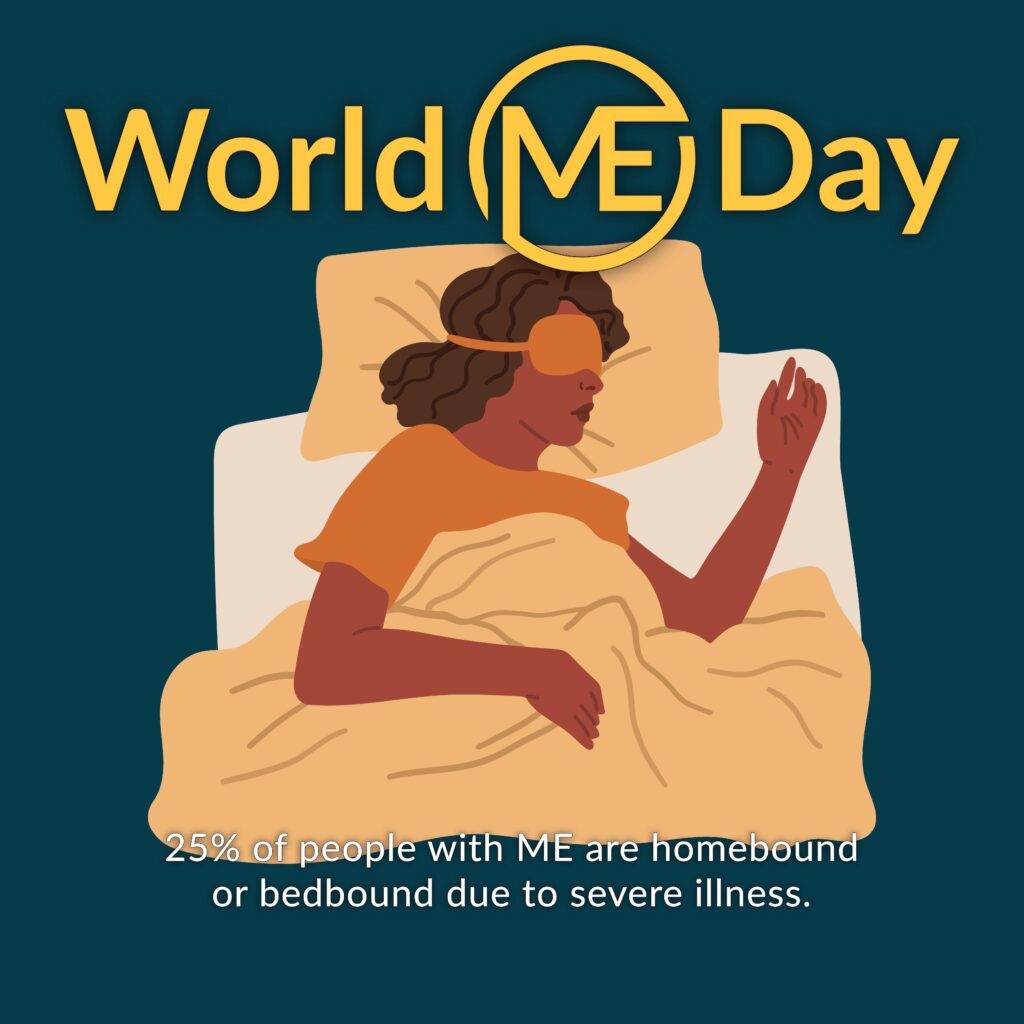
In 2021 the NICE published a guideline for the different severities of ME. It describes four levels, from mild to very severe.²
- Mild — People with mild ME/CFS care for themselves and do some light domestic tasks (sometimes needing support) but may have difficulties with mobility. Most are still working or in education, but to do this they have probably stopped all leisure and social pursuits. They often have reduced hours, take days off and use the weekend to cope with the rest of the week.
- Moderate — People with moderate ME/CFS have reduced mobility and are restricted in all activities of daily living, although they may have peaks and troughs in their level of symptoms and ability to do activities. They have usually stopped work or education, and need rest periods, often resting in the afternoon for 1 or 2 hours. Their sleep at night is generally poor quality and disturbed.
- Severe — People with severe ME/CFS are unable to do any activity for themselves or can carry out minimal daily tasks only (such as face washing or cleaning teeth). They have severe cognitive difficulties and may depend on a wheelchair for mobility. They are often unable to leave the house or have a severe and prolonged after-effect if they do so. They may also spend most of their time in bed and are often extremely sensitive to light and sound.
- Very Severe — People with very severe ME/CFS are in bed all day and dependent on care. They need help with personal hygiene and eating, and are very sensitive to sensory stimuli. Some people may not be able to swallow and may need to be tube fed.
World ME Day
There is no effective treatment for the condition. As such, millions around the world help raise money and awareness in May. The money goes to various charities, including research.
The ME Awareness Month centres on the 12th of May, as World ME Day. It was Florence Nightingale’s birthday, and it is believed that in her later years she had a chronic illness (probably ME). This date is used to help highlight people living with chronic illnesses.
I hope this article has helped in improving your understanding of ME.
If you would like to know more about ME, then the following links can help you. (Links not affiliated).
Action for ME — UK charity
The ME Association — UK charity
ME Support — UK charity
Copyright © 2023 Charlotte Clark
 Charlotte Clark